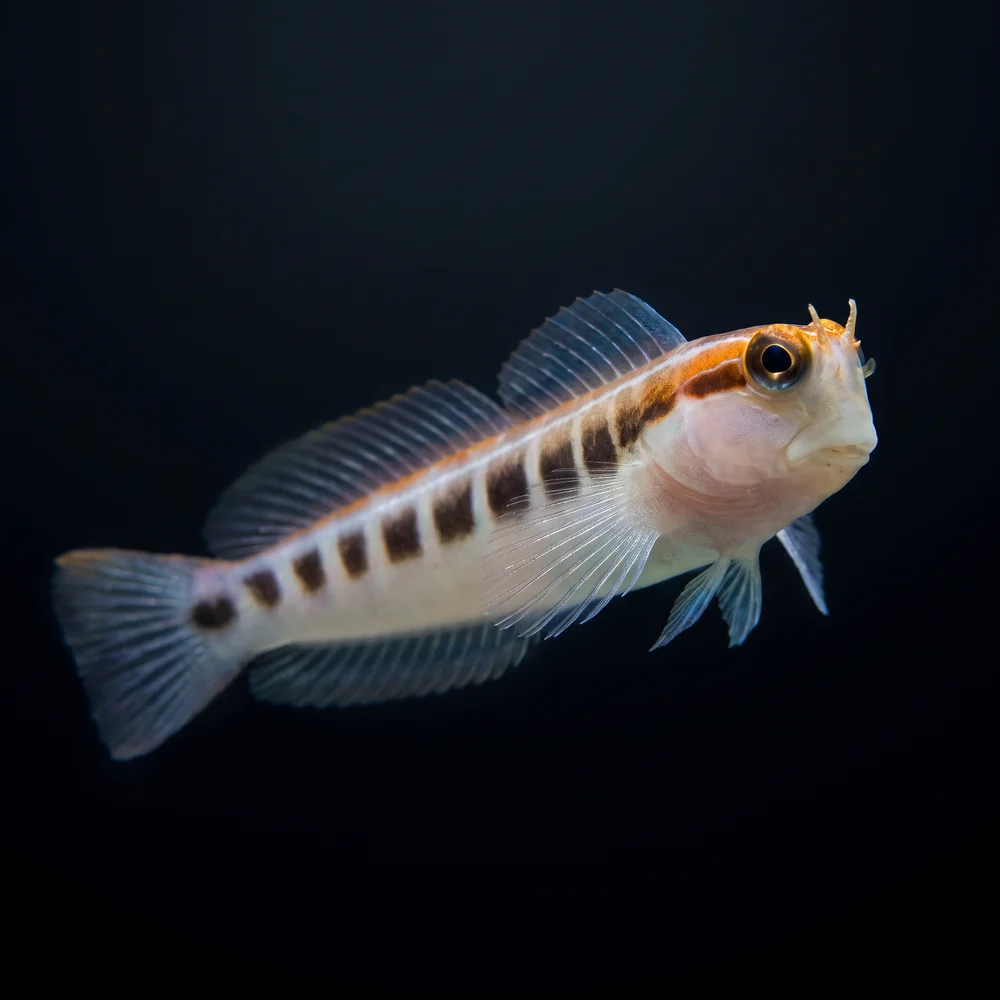
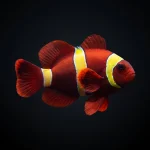
The Linear Blenny (Ecsenius lineatus) is a slender, small-bodied reef fish built along classic blenniid lines: a tapered body, pointed snout, small mouth, and oversized, expressive eyes set high on the head. Coloration runs pale tan to brownish, with dark horizontal striping tracing the length of the fish; the upper half tends toward brown or black while the lower half stays whitish. Adults reach roughly 3.5 inches. The species ranges broadly through the Indo-West Pacific, from Yemen east to Japan, the Philippines, and northwestern Australia, where it occupies coral reef habitat including the Great Barrier Reef and Indonesian waters.
A 30-gallon aquarium is the practical starting point for an adult, and the aquascape matters more than raw volume. Stack live rock so that it offers abundant crevices, ledges, and overhangs, since this fish spends its day perching on hard surfaces, darting between openings, and grazing. A mature, well-established system suits it best, as the film algae and small crustacean populations that develop over time supplement prepared feedings. Tankmate selection is part of the setup decision as well: boisterous or intimidating species will push a Linear Blenny into permanent hiding, which undermines both its health and the enjoyment of keeping it.
On the reef this blenny is an opportunistic omnivore, working hard surfaces for algal growth and picking at small invertebrate prey. That dual appetite should be reproduced in the aquarium. Offer vegetable matter in the form of frozen and dried preparations containing marine and blue-green algae, paired with small meaty items such as mysis shrimp, copepods, finely chopped seafood, and micro pellets sized for a small mouth.
Feed small portions once or twice daily rather than a single heavy meal, which better matches a grazing feeding pattern and keeps the fish occupied. Between feedings it will continue to work over rockwork for naturally occurring algae, so an established system with some film growth is an asset. Steady, frequent feeding does not eliminate grazing behavior entirely, but it does help keep attention on the rock rather than on ornamental corals.
Marine Algae PreparationsBlue-Green Algae FoodsMysis ShrimpCopepodsFinely Chopped SeafoodMicro PelletsAquarium Film Algae
This is an animated, endearing little fish. Expect near-constant activity during daylight hours, with the blenny swimming short hops between perches and nipping at surfaces as it goes. It typically adopts one favored hole in the rockwork and defends that spot, using it as a lookout from which only the head protrudes. Toward other fish it is peaceful and shows no meaningful aggression, making it a sound choice for community reef displays or calm fish-only systems. Avoid pairing it with pugnacious species that will bully it out of open water.
Reef compatibility calls for caution. Reports vary, but the recurring theme is nipping at stony surfaces: Acropora and other SPS corals may have polyps or bases picked at, and there are accounts of persistent grazing damaging favia, montipora, and small zoanthids even in well-fed specimens. Risk appears highest in lightly stocked or immature SPS displays. Fleshy-bodied corals are generally ignored, including frogspawn, hammers, octospawn, plate corals, acans, mushrooms, ricordea, clove polyps, xenia, duncans, and elegance. Weigh the mix of corals in your display before adding one, and observe closely during the first weeks.