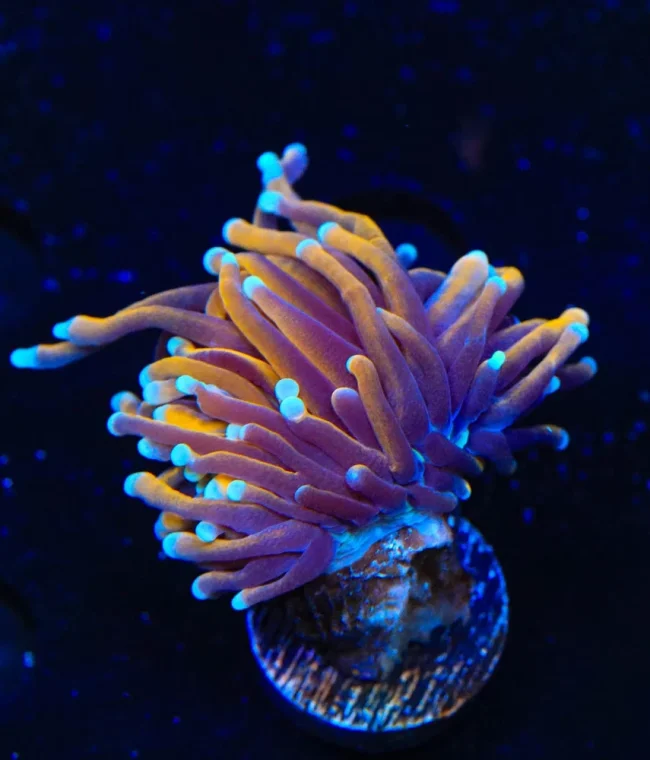
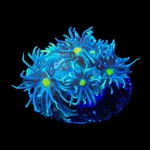
Gold Torch Coral features long, fleshy polyps with bright golden tips that sway on branching heads. Euphyllia glabrescens is a large-polyp stony coral, suited to moderate light and gentle to moderate water flow. It relies on symbiotic algae for most nutrition but accepts small meaty foods; occasional feeding supports faster growth and stronger color. Place it with ample space, as long sweeper tentacles can sting nearby corals and invertebrates.
photosynthetic, mysis shrimp, enriched brine shrimp, finely chopped marine meats (clam, krill, shrimp), zooplankton, microplankton, marine snow, powdered coral foods
Gold Torch Coral (Euphyllia glabrescens) thrives with stable, moderate conditions. Provide moderate light at roughly 100–200 PAR, acclimating to brighter zones by increasing intensity 10–15% per week to prevent bleaching. Aim for indirect, moderate flow that keeps the polyps swaying without whipping; too much force can tear tissue, while too little invites detritus and bacterial issues. Target feed 1–2 times weekly with small meaty foods (mysis, enriched brine) or fine coral foods; this supports growth and recovery after stress. Keep temperature 76–79°F (24–26°C), salinity 1.025–1.026 (35 ppt), pH 8.1–8.4, alkalinity 8.0–9.5 dKH, calcium 400–450 ppm, magnesium 1300–1400 ppm, nitrate 5–15 ppm, and phosphate 0.03–0.10 ppm. Test weekly with reliable kits, calibrate refractometers, and avoid rapid swings—torches are sensitive to sudden alkalinity and salinity changes.Place mid to lower in the tank on a stable mount with room to expand. Allow 6–10 inches of space for long sweeper tentacles; they can sting neighbors, and many keep torches separate from other Euphyllia types. Acclimate with a slow drip, dip new specimens, and quarantine if possible. Handle by the plug or rock, not the flesh. Signs of stress include receding tissue (often from swings or low nutrients) and brown jelly disease; promptly siphon decay, perform an iodine dip, improve flow, and stabilize parameters. If polyps stay shrunken, check for pests, reset flow, and verify PAR. Consistent maintenance and gentle, stable conditions are key.

Check flow pattern and direction before chasing numbers. Torches retract under direct, laminar jets or when flow alternates too rapidly. Aim for gentle, chaotic movement that just sways the polyps. Inspect for pests (flatworms, vermetid snails) and early brown-jelly signs at the septa. Night sweeper tentacles can irritate neighbors; chemical warfare feedback can also shorten daytime extension—space it farther from stingers.
Maintain moderate PAR (~150–250) with a blue-leaning spectrum; excessive white can wash tones. Keep nutrients detectable (nitrate 5–15 ppm, phosphate 0.03–0.1 ppm); ultra-low nutrients pale the gold, while excess can brown it. Avoid heavy iron or trace dosing that fuels nuisance algae on the skeleton. Stabilize alk (8–9.5 dKH) and temperature; swings stress pigments. Gradual photo-acclimation preserves chromoproteins.
Euphyllia glabrescens alternates between skeletal thickening and fission based on energy surplus and stability. Consistent alkalinity and moderate feeding (tiny mysis, enriched brine, or reef roids 1–2x weekly) favor predictable splits. Too much flow can erode new skeletal plates; too little stalls calcification. If calcium or magnesium dips, it will invest in tissue mass rather than committing to clean skeletal divides.