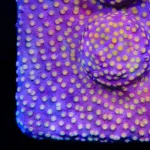
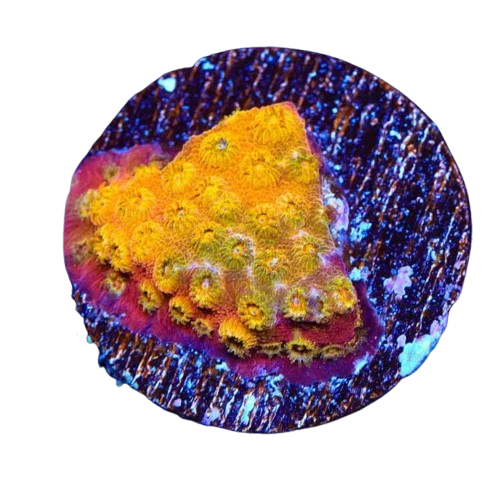
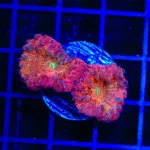
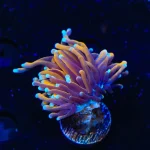
3G Mummy Eye Chalice Coral shows a flattened, plating surface with bright orange eyes on a green base. Echinophyllia aspera is a large-polyp stony chalice that grows encrusting to plating; it prefers low to moderate light and gentle to moderate water flow. It is photosynthetic with symbiotic algae but benefits from occasional small meaty feedings at night to support growth and color. Place on a stable rock with space around it, as it can extend short sweeper tentacles that may sting nearby corals.
photosynthetic, mysis shrimp, enriched brine shrimp, finely chopped seafood, zooplankton, microplankton, coral-specific powdered foods
3G Mummy Eye Chalice Coral (Echinophyllia aspera) prefers low to moderate light and gentle, indirect flow. Target 75–150 PAR, starting on the lower end to avoid bleaching; increase slowly over 1–2 weeks using shade or screen. Provide low to moderate, cross-flow that keeps the surface clean without lifting tissue; this helps prevent detritus buildup and algae at the edges. Feed 2–3 times weekly at night with fine meaty foods (mysis slurries, reef roids, rotifers) and occasional amino acids; tentacles extend after lights out. Maintain stable water: temperature 75–79°F (24–26°C), salinity 1.025–1.026 (35 ppt), pH 8.1–8.4, alkalinity 8.0–9.5 dKH, calcium 400–450 ppm, magnesium 1300–1400 ppm, nitrate 2–15 ppm, phosphate 0.03–0.08 ppm. Use reliable test kits or probes and avoid rapid swings—this coral is sensitive to alkalinity and light shocks.Place in the bottom third to mid-level on a stable rock ledge, not on abrasive sand. Allow 3–6 inches of space from neighbors; it has night-time sweepers and can sting, yet is easily damaged by aggressive LPS. Secure the frag/colony with gel glue so it can plate and encrust outward. Acclimate with a 30–45 minute drip and a coral dip if needed. Watch for issues: pale tissue (too much light), recession from edges (alk swings, pests, detritus), or slime from direct flow. Remove vermetid snails and flatworms promptly, and keep nutrients non-zero to maintain color and growth.
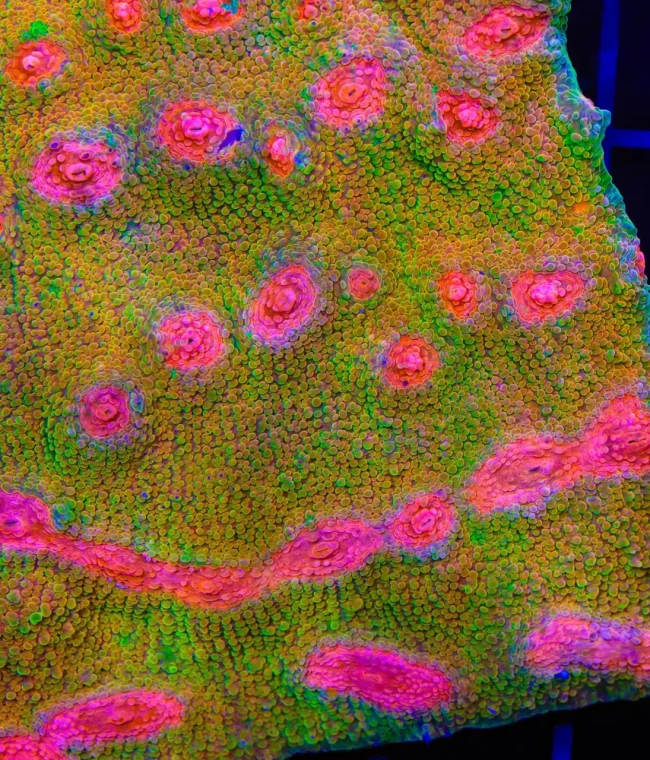
Echinophyllia aspera colors are spectrum- and nutrient-sensitive. Too much white light or very low nutrients can mute contrast. Aim for low–moderate PAR (70–150), strong blue/UV channels, and modest nutrients (NO3 5–15 ppm, PO4 0.03–0.1). Increase indirect flow to prevent film buildup, and target feed fine meaty foods at night to restore flesh and pigment.
Edge recession often tracks instability: recent alkalinity swings, sudden PAR increases, or detritus settling on the lip. Verify alk stability (±0.2 dKH), reduce PAR by 20–30% with acclimation, raise the coral slightly to improve under-skeleton flow, and turkey-baste weekly. Check for vermetid snails or stinging neighbors; both can trigger localized dieback.
Provide a flat, open tile or shelf with gentle, oblique flow and lower PAR; E. aspera tends to form laminar plates when it can expand horizontally without shadows. Mount it slightly off the substrate to keep the undersides clean. Avoid frequent fragging during early expansion—continuous edges favor plate development and eye splitting.