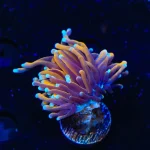
24K Gold Torch Coral shows long, swaying tentacles with golden tips and contrasting mouths. Euphyllia glabrescens is a branching large-polyp stony coral that prefers moderate light and moderate, indirect water flow. It relies on symbiotic algae for energy but benefits from occasional small meaty feedings, which can support growth and color. Place it with ample space for sweeper tentacles to prevent stings to nearby corals, and secure the frag to avoid damage from movement.
Photosynthetic, mysis shrimp, enriched brine shrimp, finely chopped marine meats, zooplankton, microplankton, coral-specific powdered foods
24K Gold Torch Coral (Euphyllia glabrescens) thrives under moderate light and flow with stable, nutrient-rich water. Aim for 100–200 PAR; start low and increase gradually over 2–3 weeks to prevent bleaching. Provide moderate, random flow that sways tentacles without blasting the flesh; too much direct flow causes tissue recession and exposed skeleton. Feed 1–2 times weekly with small meaty foods (mysis, brine, finely diced shrimp) or coral foods; spot feed gently to support growth and color. Keep temperature 24–26°C/75–78°F, salinity 1.025–1.026, pH 8.1–8.4, alkalinity 8.0–9.5 dKH, calcium 420–460 ppm, magnesium 1300–1400 ppm, nitrate 2–10 ppm, phosphate 0.03–0.08 ppm. Test these weekly with reliable kits and a calibrated refractometer; avoid rapid swings, especially in alkalinity and salinity.Place mid to lower regions on a stable rock ledge where the base won’t wobble or touch sand. Allow 6–10 inches of space from neighbors; long sweeper tentacles extend at night and can sting even other Euphyllia. Temperament is semi-aggressive; avoid mixing with delicate LPS or soft corals nearby. Acclimate by temperature matching, dipping for pests, and light acclimating under partial shade. Handle by the skeleton, not the tissue. Common issues: bleaching from excess light, recession from unstable parameters or harsh flow, and brown jelly disease—remove affected heads, increase oxygenation/flow, and consider an iodine dip. Keep detritus off the skeleton with gentle flow and maintain consistent maintenance routines.
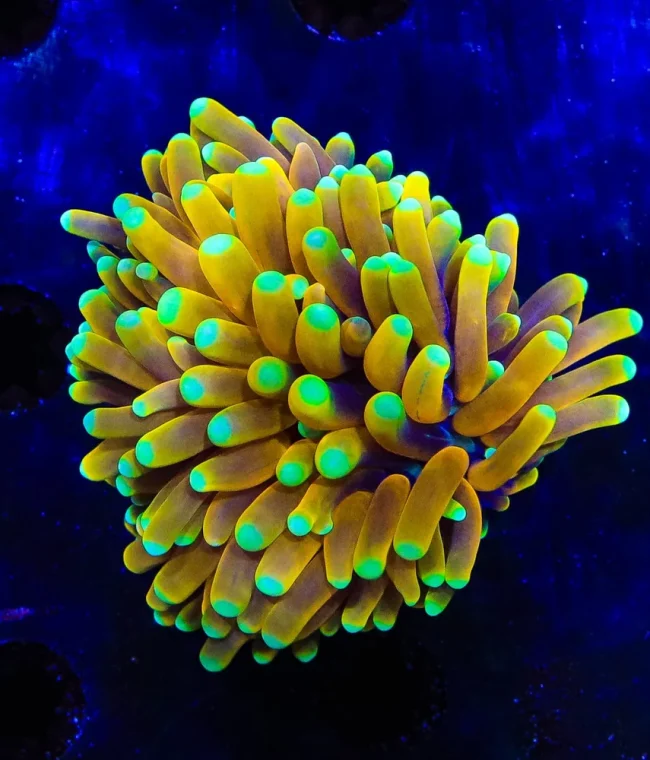
Color shift often stems from excess blue-heavy lighting, low nutrients, or unstable alkalinity. Aim for moderate PAR (150–250), a balanced spectrum with some white, and steady NO3 (5–15 ppm) and PO4 (0.03–0.1 ppm). Keep alk 8–9 dKH, and don’t strip trace elements with overuse of media. Occasional iodine/iron replenishment helps, but avoid overdosing.
Give 6–8 inches clearance and use broad, alternating flow that moves tissue without whipping the tentacles. Place it down-current from sensitive neighbors and run fresh carbon to reduce chemical warfare. Avoid high, laminar streams that trigger longer sweepers. Feeding lightly after lights out can reduce foraging behavior and calm night extension.
Immediately siphon the jelly, then perform a concentrated iodine or antibacterial coral dip. If only one head is affected, frag it away with a clean saw to protect healthy tissue. Increase aeration and flow around the colony, stabilize alk and temperature, and reduce organics with a partial water change and fresh carbon. Monitor daily for reappearance.