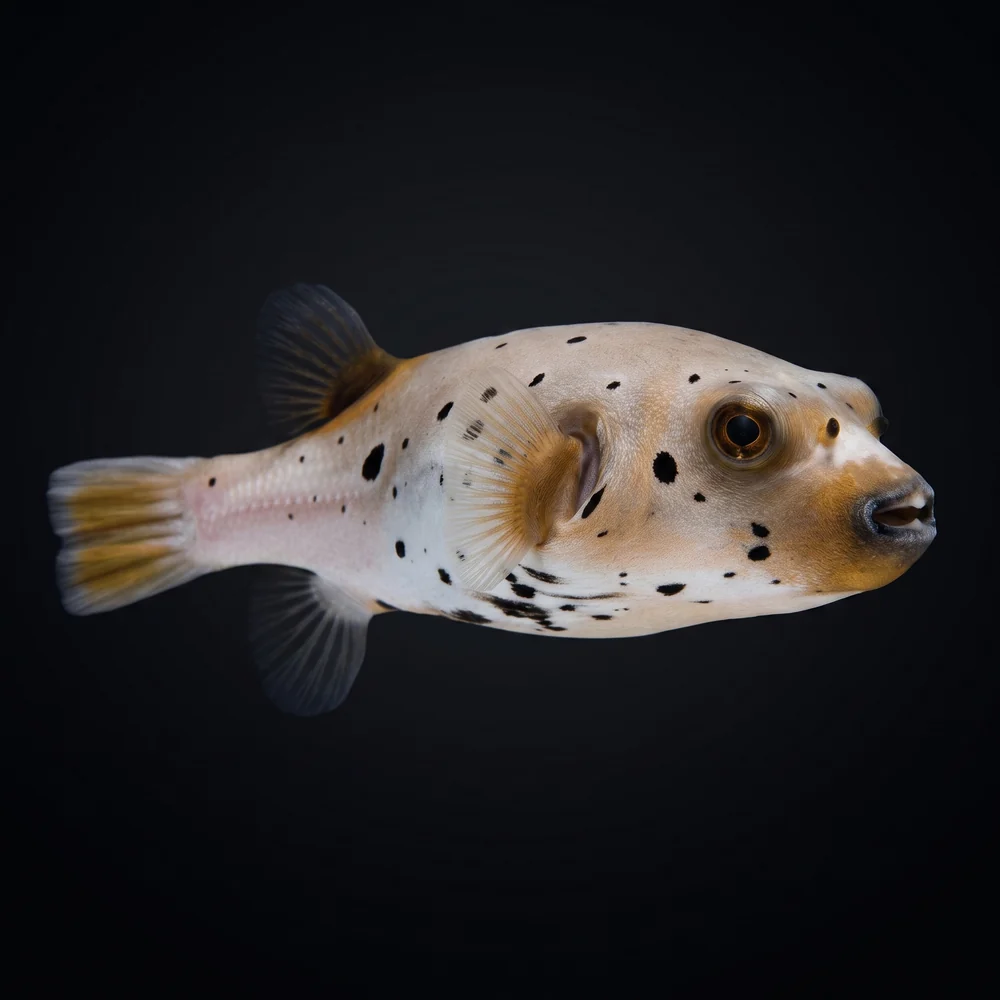
The Dogface Puffer, Arothron nigropunctatus, ranges across the Indo-Pacific from Japan to East Africa and south to Australia, where it inhabits coral reef environments. The common name comes from the dark shading around the eyes and mouth, which gives the blunt face an unmistakably canine expression. Body coloration is typically brown scattered with black spots and broken by areas of white. Adults reach roughly 13 inches, and like other puffers this species carries a double-layered, pleated skin that permits it to inflate into a spiky ball when threatened, along with a beak-like set of shell-crushing teeth that grow continuously throughout life.
Plan adult housing around a 125-gallon aquarium at minimum, and favor a tank roughly six feet long so a fish of this mass has genuine room to cruise. Build the layout with caves and open rockwork for shelter balanced against generous open swimming lanes; despite their eventual boldness, these puffers are shy on arrival and settle faster when a retreat is available. Strong water movement is welcomed. A heavy, secure lid is not optional, as this species is capable of jumping. Messy feeding habits and a large protein load mean robust filtration and a sizable water volume make maintenance far more manageable.
This is a fish-only-with-live-rock candidate rather than a reef inhabitant. Care Level is Moderate, largely because of the dental maintenance, waste output, and thoughtful tankmate selection the species demands over the long haul.
On the reef, Dogface Puffers hunt at night, working over mollusks, crustaceans, sponges, corals, sea squirts, and algae, and crushing shells with their powerful beak. In the aquarium they are straightforward carnivores that thrive on substantial meaty items: raw shrimp, squid, krill, mussels, clams, scallops, chopped fish, octopus, and crab meat. Offer these in pieces sized to the fish and feed on a consistent daily or near-daily schedule, adjusting portions to keep water quality in check.
Hard-shelled foods are a health requirement, not an enrichment extra. Include whole snails, crabs, or shrimp still in the shell on a regular basis so the continuously growing beak stays worn down; an overgrown beak can eventually prevent a puffer from eating at all and may require veterinary trimming. Newly introduced fish are often withdrawn and may refuse food for up to a week, so keep the tank quiet, continue presenting food, and be patient. Once settled, most become shameless beggars that rush the glass at feeding time.
Raw ShrimpSquidKrillMusselsClamsScallopsChopped FishShell-On Snails And Crabs
Dogface Puffers are slow-cruising, deliberate fish with a great deal of personality. They quickly learn to associate keepers with food, hovering at the front glass and even spitting water to solicit a meal, and some individuals can be hand-fed, though the bite is powerful enough that caution is warranted. Temper their environment carefully: a puffer should never be harassed or stressed into inflating, as the act can be harmful or fatal. Their semi-aggressive disposition is best matched with confident tankmates rather than delicate ones.
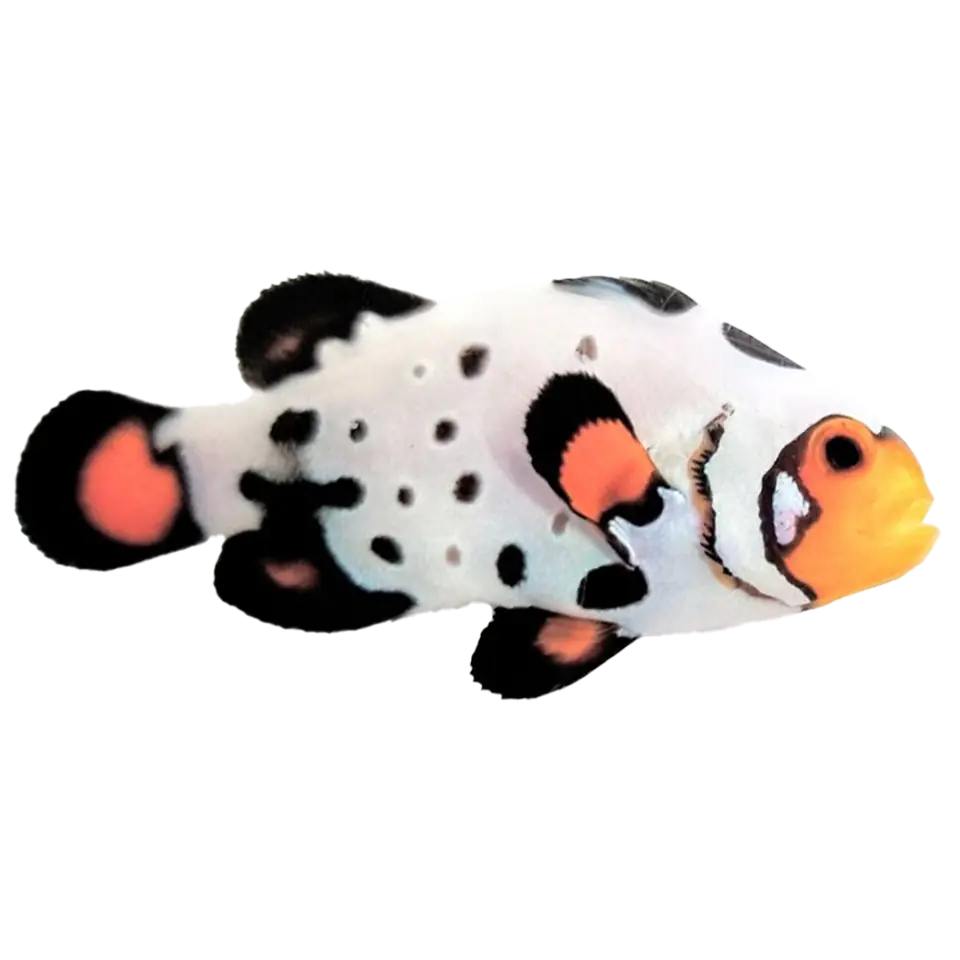
Good companions include other similarly sized Arothron puffers, clownfish, tangs, angelfish, lionfish, triggerfish, moray eels, butterflyfish, and squirrelfish. Very small fish are likely to be swallowed, and Porcupine Puffers can prove problematic due to aggression. This species is not reef safe. It will consume shrimp, snails, crabs, and hermit crabs, and it may pick at or damage both soft and stony corals, so any invertebrate in the system should be regarded as food. A fish-only display with live rock suits it best.